


-

Plataforma personalizable FRP
-

Plataforma personalizable FRP
-

Plataforma personalizable FRP
-

Plataforma personalizable FRP
-

Plataforma personalizable FRP
-

Plataforma personalizable FRP
-

Plataforma personalizable FRP
Un FRP (Fiber-Reinforced Plastic) Customizable Platform is a durable, lightweight, and corrosion-resistant platform designed for a variety of industrial, commercial, and marine applications. Unlike traditional steel or wooden platforms, FRP platforms offer full customization options, allowing users to specify size, load capacity, surface texture, and other key attributes to meet specific project requirements.
Introducción al rendimiento del producto
This document provides an in-depth analysis of FRP Customizable Platforms, including their Propiedades físicas, especificaciones, ventajas, desventajas y aplicaciones.
1. Physical Properties of FRP Customizable Platforms
1.1. High Strength-to-Weight Ratio
-
FRP platforms are significantly lighter than steel (up to 75% lighter), making them easy to transport and install.
-
A pesar de su naturaleza ligera, FRP platforms exhibit high mechanical strength, allowing them to support substantial loads.
1.2. Corrosión y resistencia química
-
Los materiales de FRP son highly resistant to rust, moisture, and industrial chemicals, making them ideal for environments such as offshore platforms and chemical processing plants.
-
No degradation in harsh weather conditions, including UV exposure and saltwater exposure.
1.3. Aislamiento eléctrico y térmico
-
Material no conductor, making it safe for use in electrical substations and other high-voltage areas.
-
Baja conductividad térmica reduces heat transfer, improving safety and comfort.
1.4. Resistencia al fuego
-
Available with fire-retardant resin options such as phenolic or vinyl ester resins.
-
Can meet various fire safety standards with low smoke and toxic emissions.
1.5. Custom Surface Finishes
-
Superficies antideslizantes available for enhanced safety in wet and hazardous environments.
-
Recubrimientos resistentes a los rayos UV can be applied for outdoor applications.
2. Especificaciones y opciones de personalización
2.1. Dimensiones estándar (personalizables)
-
Espesor: Disponible en 25mm, 38mm, 50mm, or custom sizes.
-
Tamaños de los paneles: Common sizes include 1m × 1m, 1.2m × 2.4m, or fully customized dimensions.
-
Load Capacities: Adjustable to support 500 – 10,000 kg/m² based on reinforcement and design.
2.2. Types of FRP Customizable Platforms
-
Open-Mesh FRP Grating Platforms – Ensures proper drainage and airflow.
-
Solid FRP Platforms – Used in clean environments such as food processing plants.
-
Modular FRP Platforms – Designed for quick assembly and expansion.
-
Heavy-Duty FRP Platforms – Engineered for extreme load-bearing applications.
2.3. Composición del material
-
Reinforcement Fibers: E-glass or S-glass fibers for standard strength, carbon fiber for extreme load-bearing needs.
-
Tipos de resina:
-
Resina de poliéster – Cost-effective general-use resin.
-
Resina de éster de vinilo – High chemical and temperature resistance.
-
Resina epoxica – Maximizes mechanical strength.
-
Resina fenólica – Provides superior fire resistance and low smoke emission.
-
2.4. Propiedades mecánicas (valores típicos)
| Propiedad | Valor típico |
|---|---|
| Resistencia a la tracción | 300-800 MPa |
| Resistencia a la flexión | 250-700 MPa |
| Resistencia a la compresión | 300-850 MPa |
| Densidad | 1,7-2,2 g/cm³ |
| Módulo de elasticidad | 25-45 GPa |
3. Advantages of FRP Customizable Platforms
3.1. Tailored to Specific Needs
-
Fully customizable in size, shape, color, load capacity, and surface texture.
-
Can be designed with cutouts, railings, and drainage holes for specific applications.
3.2. High Strength and Durability
-
Lightweight yet capable of supporting heavy loads, reducing transportation and installation costs.
3.3. Corrosion Resistance for Harsh Environments
-
Withstands exposure to saltwater, industrial chemicals, and extreme temperatures.
3.4. Electrical and Magnetic Safety
-
Non-conductive and non-magnetic, ensuring safety in power plants and telecom sites.
3.5. Slip-Resistant and Safe
-
Customizable anti-slip textures available for wet or hazardous environments.
3.6. Low Maintenance and Long Lifespan
-
No painting, sealing, or chemical treatments required.
-
Does not rust, warp, or degrade like metal or wood.
3.7. Easy Installation
-
Lightweight, modular design allows for quick assembly and adjustments.
-
No welding or heavy lifting equipment required.
4. Disadvantages of FRP Customizable Platforms
4.1. Mayor costo inicial
-
Higher upfront costs compared to steel or wood, pero lower maintenance costs over time make it cost-effective.
4.2. Menor rigidez en comparación con el acero
-
Requires additional supports for very high-load applications.
4.3. UV Sensitivity
-
May require UV-resistant coatings for long-term outdoor use.
4.4. Limited Heat Resistance
-
Weakens at temperatures above 200°C, mientras que el acero puede soportar temperaturas mucho más altas.
4.5. Desafíos del reciclaje
-
Difficult to recycle due to composite material composition.
5. Applications of FRP Customizable Platforms
5.1. Heavy-Duty Industrial Applications
-
Oil Refineries and Chemical Plants – Resistant to chemicals and corrosion.
-
Fábricas de acero y fundiciones – Non-conductive and safe for high-heat environments.
-
Plantas de tratamiento de aguas residuales – Waterproof and long-lasting.
5.2. Marine and Offshore Structures
-
Shipyards and Docks – Corrosion-resistant in saltwater environments.
-
Plataformas petrolíferas marinas – Durable and maintenance-free.
5.3. Public Infrastructure and Construction
-
Bridges, Walkways, and Stairs – Lightweight, durable, and slip-resistant.
-
Transit Stations – Fire-resistant and designed for heavy foot traffic.
5.4. Electricidad y telecomunicaciones
-
Substations and Power Plants – Non-conductive for improved safety.
-
Data Centers – Provides a durable, lightweight alternative to steel flooring.
5.5. Food and Pharmaceutical Industries
-
Cleanrooms and Processing Plants – Easy to clean and highly sanitary.
6. Conclusión
El Plataforma personalizable FRP is an advanced, high-performance solution tailored for industrial, marine, and public infrastructure applications. With its superior strength, corrosion resistance, and fully customizable design, it is an ideal choice for projects that demand long-lasting, low-maintenance, and safe platforms. While initial costs may be higher than steel, the long-term savings on maintenance and durability make FRP platforms a cost-effective and sustainable investment.
Plataforma personalizable FRP
Serie :
Productos principales >solicitud
Plantas industriales y fábricas químicas Plataformas marinas y entornos marinos Instalaciones de tratamiento de agua y aguas residuales Centrales eléctricas y subestaciones Estaciones de transporte público y puentes peatonales Sitios de construcción y almacenes
Nombre de la marca :
TFcompuesto
Nombre del producto :
Plataforma personalizable FRP
Material :
Fibra de vidrio
Color :
Amarillo,Otro


Preguntas más frecuentes
P:
How much load can an FRP High Load Platform support?
A :
The load capacity depends on the design, thickness, and support structure. Standard FRP High Load Platforms can support up to 10,000 kg/m². Specific load ratings should be verified based on project requirements.
P:
What types of FRP High Load Platforms are available?
A :
Heavy-Duty Grating Platforms – Open-mesh for slip resistance and drainage. Solid-Surface Platforms – Continuous flooring for clean environments. Custom Modular Platforms – Pre-fabricated for easy installation and expansion.
P:
What industries use FRP High Load Platforms?
A :
FRP High Load Platforms are commonly used in: Oil & Gas Industry – Offshore rigs, refineries, and chemical plants. Marine & Shipyards – Docks, decks, and floating platforms. Wastewater Treatment Plants – Corrosion-resistant walkways and platforms. Construction & Infrastructure – Bridges, railway stations, and industrial floors. Power Plants & Substations – Non-conductive safety platforms.
P:
Can FRP High Load Platforms be used outdoors?
A :
Yes! FRP platforms are UV-resistant and weatherproof, making them ideal for outdoor applications such as bridges, piers, and marine structures. However, UV-protective coatings may be recommended for long-term exposure.
P:
Are FRP High Load Platforms fire-resistant?
A :
Standard FRP has some fire resistance, but fire-retardant resins (e.g., phenolic or vinyl ester resins) can be used to enhance fire safety. Fire ratings depend on industry and regulatory requirements.
P:
How long does an FRP High Load Platform last?
A :
The lifespan of FRP platforms is 25–50 years, depending on environmental exposure and load conditions. They require minimal maintenance, unlike steel or wood platforms.
Otros productos relacionados
-

Barandillas y pasamanos de FRP
Las barandillas y pasamanos de FRP (plástico reforzado con fibra de vidrio) son soluciones de seguridad modernas diseñadas para aplicaciones industriales y comerciales donde se requiere resistencia a la corrosión, durabilidad y...

-

Plataforma ferroviaria de FRP
Este documento proporciona una descripción detallada de la plataforma ferroviaria de FRP, incluidas sus propiedades físicas, especificaciones, ventajas, desventajas y aplicaciones comunes. 1. Propiedades físicas...
-

Pasarelas de FRP
Este documento proporciona una descripción detallada de las pasarelas de FRP, cubriendo sus propiedades físicas, especificaciones, ventajas, desventajas y aplicaciones comunes. 1. Propiedades físicas de F...
-
Plataforma de alta carga de FRP
Este artículo proporciona una descripción detallada de las plataformas de alta carga de FRP, incluidas sus propiedades físicas, especificaciones, ventajas, desventajas y aplicaciones. 1. Propiedades físicas de...
-
Plataforma FRP
Este artículo proporciona una descripción detallada de las plataformas FRP, incluidas sus propiedades físicas, especificaciones, ventajas, desventajas y aplicaciones. 1. Propiedades físicas de las plataformas FRP...
-

Pasamanos de PRFV
✅ Características principales de los pasamanos de PRFV Resistencia a la corrosión: El PRFV es altamente resistente a los productos químicos, al agua salada y a los factores ambientales, lo que lo hace ideal para entornos marinos, de alta mar e industriales...
-
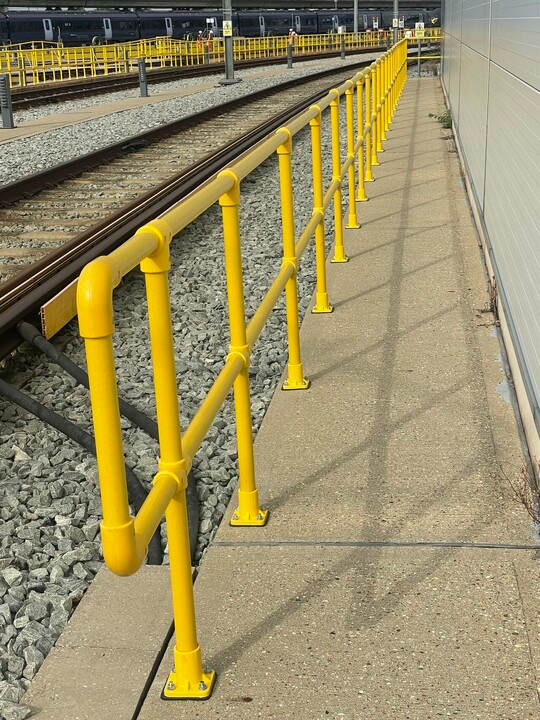
Descripción detallada de los sistemas de pasamanos de FRP
El pivote externo de PRFV es un accesorio giratorio en línea versátil, que se utiliza a menudo cuando los ángulos varían en pendientes, escalones y descansos. La GRP 116 Mid Corner es una junta de esquina de 90°, a menudo utilizada...
-
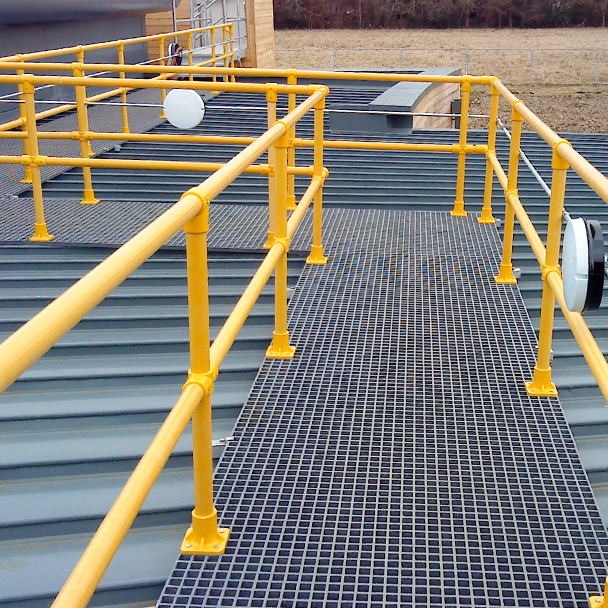
Sistema de pasamanos de GRP de fibra de vidrio resistente a la corrosión antideslizante ecológico
El pivote externo de PRFV es un accesorio giratorio en línea versátil, que se utiliza a menudo cuando los ángulos varían en pendientes, escalones y descansos. La GRP 116 Mid Corner es una junta de esquina de 90°, a menudo utilizada...