


-

Pièces en PRV de forme spéciale
-

Pièces en PRV de forme spéciale
-

Pièces en PRV de forme spéciale
-

Pièces en PRV de forme spéciale
PRV (Plastique Renforcé de Fibres) Pièces de forme spéciale sont composants composites conçus sur mesure conçu pour répondre exigences structurelles, fonctionnelles ou esthétiques spécifiques. Contrairement aux profilés FRP standard, ces pièces sont fabriquées en formes et géométries complexes en utilisant techniques de moulage, de pultrusion ou d'enroulement filamentaire.
Présentation des performances du produit
Les pièces en PRV de forme spéciale sont largement utilisées dans applications industrielles, maritimes, automobiles, aérospatiales et de construction où léger, résistant à la corrosion et haute résistance sont nécessaires. Ces composants sont souvent personnalisés pour Des projets d'ingénierie uniques, remplaçant les matériaux traditionnels comme le métal, le bois ou le béton.
2. Spécifications et dimensions conventionnelles
Spécifications communes
| spécification | Détails |
|---|---|
| Matériel | Polymère renforcé de fibres de verre (PRFV) |
| Types de résine | Polyester, vinylester, époxy, phénolique |
| Options de couleur | Gris, jaune, vert, blanc (personnalisable) |
| Finition de surface | Lisse, texturé, granuleux (antidérapant) |
| Retardateur de flamme | Disponible (ASTM E84 Classe 1 ou 2) |
| Processus de fabrication | Pultrusion, moulage, stratification manuelle, RTM |
| Protection UV | Oui (pour les applications extérieures) |
| Conductivité électrique | Non conductrice |
Dimensions standard et personnalisées
-
Les dimensions varient en fonction des exigences de l'application.
-
La longueur, la largeur et l'épaisseur peuvent être sur mesure pour répondre aux besoins spécifiques du projet.
-
Les pièces en PRV de forme spéciale comprennent des géométries complexes telles que des courbes, des angles, des creux et des structures renforcées.
-
Peut être conçu pour intégration avec d'autres composants en PRV.
3. Principaux avantages des pièces de forme spéciale en PRV
✅ Conception personnalisée et grande flexibilité
-
Fabriqué en formes et structures complexes que les matériaux traditionnels ne peuvent pas réaliser.
-
Peut être adapté à des besoins spécifiques en matière d'ingénierie, d'esthétique ou de performance.
✅ Résistance à la corrosion et aux produits chimiques
-
Résistant à acides, alcalis et humidité, ce qui les rend idéaux pour environnements marins, industriels et chimiques.
-
Non rouille, pourriture ou dégradation comme l'acier ou le bois.
✅ Léger mais très résistant
-
70% plus léger que l'acier tout en conservant une excellente intégrité structurelle.
-
Plus facile à transporter et à installer, réduisant ainsi les coûts globaux de main-d'œuvre et de logistique.
✅ Options ignifuges
-
Disponible en versions ignifuges (ASTM E84 Classe 1 ou 2).
-
Adapté aux industries exigeant normes de sécurité élevées.
✅ Résistance aux intempéries et aux UV
-
Résines stabilisées aux UV assurer la longévité dans conditions météorologiques extérieures et difficiles.
-
Résiste forte humidité, températures extrêmes et lumière directe du soleil.
✅ Isolation électrique et thermique
-
Non conducteur, assurant sécurité dans les applications électriques.
-
Faible conductivité thermique, ce qui le rend adapté à environnements sensibles à la chaleur.
✅ Faible entretien et longue durée de vie
-
Nécessite entretien minimal par rapport au métal ou au bois.
-
Durée de vie de Plus de 25 ans, réduisant ainsi les coûts de remplacement à long terme.
4. Applications des pièces de forme spéciale en PRV
🔹 Applications industrielles et structurelles
✔ Structures de support, poutres sur mesure, enceintes et boîtiers mécaniques.
✔ Renforts non métalliques pour équipements et machines industriels.
🔹 Industrie maritime et offshore
✔ Composants résistants à la corrosion pour navires, quais et plateformes offshore.
✔ Coques de bateaux, structures de pont sur mesure et enceintes de sécurité.
🔹 Construction et infrastructures
✔ Façades architecturales, panneaux décoratifs et éléments de construction légers.
✔ Ponts, garde-corps et systèmes de passerelles renforcés.
🔹 Automobile et transport
✔ Panneaux de carrosserie personnalisés, carénages aérodynamiques et composants légers pour véhicules.
✔ Composants pour systèmes ferroviaires et de métro permettant de réduire le poids et d'améliorer l'efficacité.
🔹 Industrie chimique et pétrochimique
✔ Réservoirs, canalisations et solutions de stockage sur mesure résistants aux produits chimiques agressifs.
✔ Enceintes non corrosives pour le stockage de matières dangereuses.
🔹 Électricité et télécommunications
✔ Boîtiers non conducteurs, boîtes de jonction et systèmes de gestion des câbles.
✔ Antennes, radômes et composants d'isolation en PRV.
5. Comparaison : Pièces de forme spéciale en PRV vs. Matériaux traditionnels
| Fonctionnalité | Pièces en PRV de forme spéciale | Acier | Aluminium | Bois |
|---|---|---|---|---|
| Lester | Poids léger | Lourd | Modéré | Poids léger |
| Résistance à la corrosion | Excellent | Mauvais (Rouilles) | Modéré | Faible (Pourriture et Moisissure) |
| Rapport force/poids | Haut | Haut | Moyen | Faible |
| Conductivité électrique | Non conductrice | Conducteur | Conducteur | Non conductrice |
| Résistance aux intempéries | Excellent | Pauvre | Modéré | Pauvre |
| Entretien | Faible | Haut | Modéré | Haut |
| Capacité de personnalisation des formes | Excellent | Limité | Limité | Modéré |
6. Comment choisir la pièce FRP de forme spéciale appropriée ?
Tenez compte des facteurs suivants lors de votre sélection Pièces en PRV de forme spéciale:
✅ Type d'application – Usage industriel, maritime, de construction ou de transport.
✅ Type de résine – Polyester (standard), Ester vinylique (résistant aux produits chimiques), ou Époxy (haute résistance).
✅ Taille et forme – Dimensions, angles et options de renforcement personnalisés.
✅ Traitement de surface - Lisse, granuleux (antidérapant) ou texturé.
✅ Conditions environnementales – revêtements résistants aux UV pour une exposition en extérieur.
✅ Conformité aux normes de sécurité incendie – Versions ignifuges pour les applications critiques en matière de sécurité.
7. Foire aux questions (FAQ)
Q1 : Quels procédés de fabrication sont utilisés pour les pièces de forme spéciale en PRV ?
Les pièces en PRV de forme spéciale sont produites à partir de :
-
Pultrusion – Pour les profils linéaires et robustes.
-
Moulage et stratification manuelle – Pour les formes complexes et les grandes structures.
-
Moulage par transfert de résine (RTM) – Pour des motifs complexes et de haute précision.
Q2 : Les pièces en PRV de forme spéciale sont-elles personnalisables ?
Oui ! Ils peuvent l'être entièrement personnalisable pour la forme, la taille, l'épaisseur, le type de résine, la finition de surface et la couleur.
Q3 : Quelle est la durabilité des pièces en PRV de forme spéciale ?
Ils ont un durée de vie de plus de 25 ans, avec résistance aux chocs, aux produits chimiques et aux intempéries.
Q4 : Les pièces en PRV de forme spéciale peuvent-elles être utilisées dans des environnements à haute température ?
Oui, résines résistantes à la chaleur peut être utilisé pour résister à des températures extrêmes.
Q5 : Comment les pièces en PRV de forme spéciale se comparent-elles aux matériaux traditionnels comme l'acier ?
Ils sont Plus léger, résistant à la corrosion, plus facile à installer et nécessitant moins d'entretien que l'acier.
Q6 : Quels secteurs bénéficient le plus des pièces de forme spéciale en PRV ?
Des industries telles que construction, maritime, chimie, transport et infrastructures utiliser FRP pour composants légers, résistants à la corrosion et conçus sur mesure.
Q7 : Comment les pièces en PRV de forme spéciale sont-elles installées ?
Ils peuvent être installés en utilisant fixations mécaniques, adhésifs ou méthodes d'assemblage intégrées.
8. Conclusion
Les pièces de forme spéciale en PRV offrent une flexibilité, une robustesse et une durabilité de conception inégalées pour applications industrielles, structurelles et marines. Leur léger, résistant à la corrosion et longue durée de vie les rendre supérieurs aux matériaux traditionnels comme acier, aluminium et bois.
Pièces en PRV de forme spéciale
Série :
Principaux produits >application
🔹 Structures industrielles – Charpentes porteuses, passerelles et plateformes. 🔹 Secteur maritime et offshore – Construction navale, quais et plateformes pétrolières. 🔹 Industrie chimique et pétrochimique – Composants structuraux résistants aux acides. 🔹 Industrie électrique et énergétique – Charpentes non conductrices et supports de câbles. 🔹 Traitement de l'eau et des eaux usées – Structures de traitement des eaux résistantes à la corrosion.
Marque :
TFcomposite
Nom du produit :
Pièces en PRV de forme spéciale
Matériel :
Fibre de verre
Couleur :
Gris, Autre


FAQ
Q :
Quelle est la durée de vie des pièces en PRV de forme spéciale ?
UN :
Les pièces en PRV de forme spéciale ont une durée de vie de plus de 25 ans, surpassant largement de nombreux matériaux traditionnels tels que le bois (5 à 10 ans) ou l'acier (10 à 15 ans, selon les conditions).
Q :
Les pièces en PRV de forme spéciale peuvent-elles être utilisées à l'extérieur ?
UN :
Oui ! Les pièces en PRV de forme spéciale sont extrêmement résistantes aux UV et aux intempéries, ce qui les rend idéales pour une utilisation en extérieur dans des environnements difficiles tels que les applications marines, les usines chimiques et les infrastructures.
Q :
Quelles sont les dimensions et tailles typiques des pièces de forme spéciale en PRV ?
UN :
Les dimensions des pièces en PRV de formes spéciales varient considérablement selon l'application et la conception. Cependant, les dimensions courantes sont les suivantes : Longueur : personnalisable selon les exigences du projet (généralement de 3 m à 6 m). Épaisseur : généralement de 3 mm à 50 mm, voire plus selon les besoins de résistance. Largeur : adaptable à la forme et à la fonction requises (des petits profilés aux grandes plaques). Des formes sur mesure, telles que des profilés courbes, angulaires et creux, peuvent être réalisées pour répondre précisément aux spécifications de conception.
Autres produits connexes
-
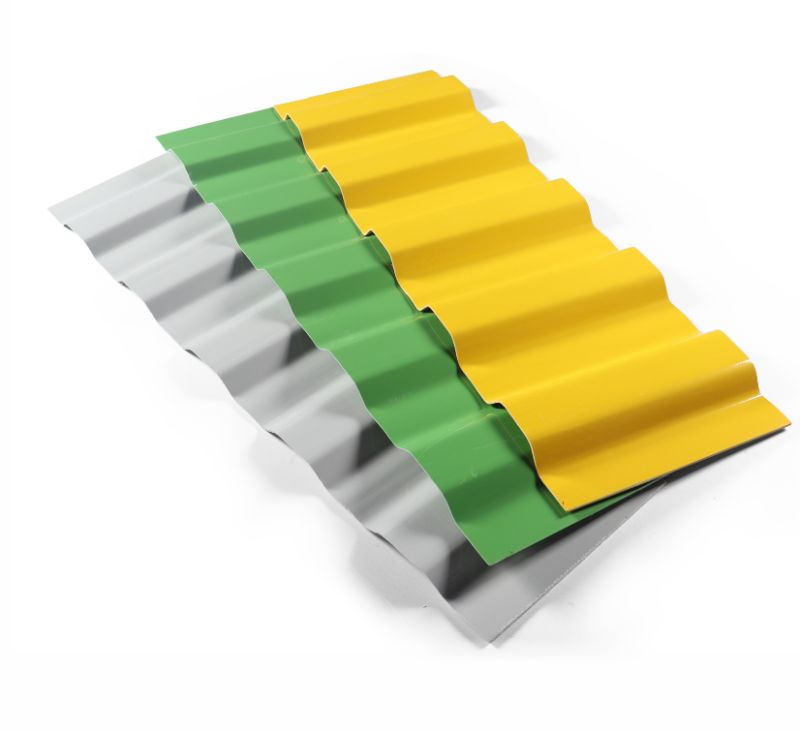
Tuiles de toiture en fibre de verre
Les tuiles de toiture en fibre de verre sont des éléments de toiture légers et performants, fabriqués à partir de fibres de verre continues intégrées dans une matrice de résine thermodurcissable. Conçues pour une résistance supérieure aux intempéries….

-
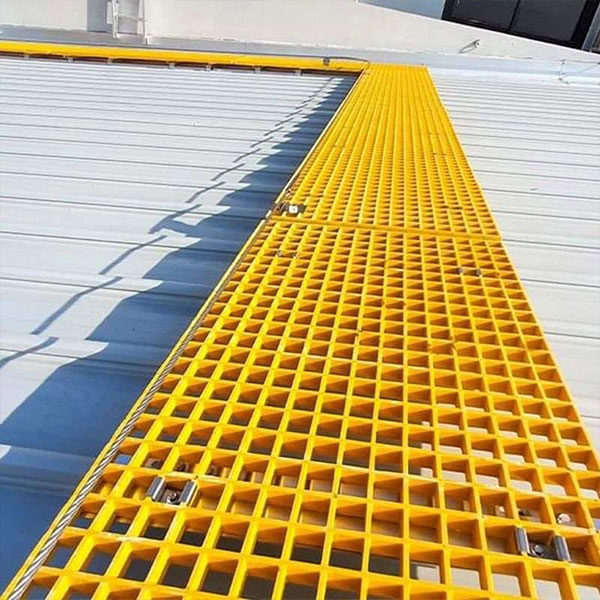
Passerelles en PRV
Les passerelles en PRV (plastique renforcé de fibres) sont des plateformes piétonnes durables et résistantes à la corrosion, fabriquées à partir de matériaux composites, généralement de fibres de verre renforcées de polyester, de vinylester ou d'époxy...
-
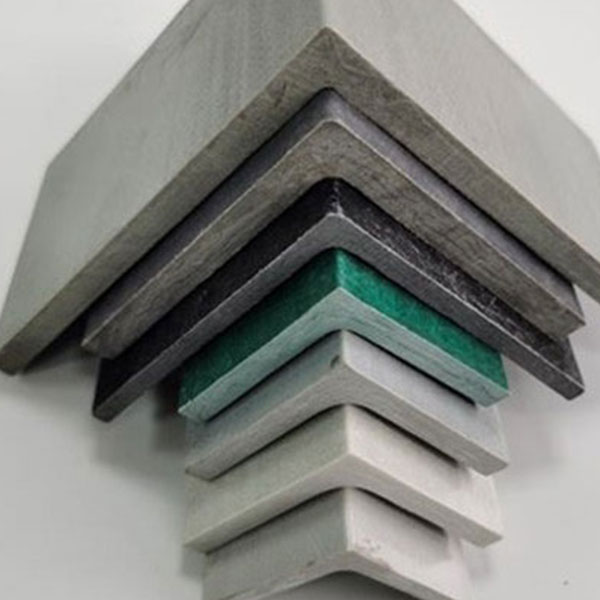
Profilé pultrudé en PRV
Les profilés pultrudés en PRV sont des formes structurelles fabriquées à partir de plastique renforcé de fibres par un procédé de fabrication en continu appelé pultrusion. Ce procédé consiste à étirer des fibres, généralement du verre, du caoutchouc, etc.
-
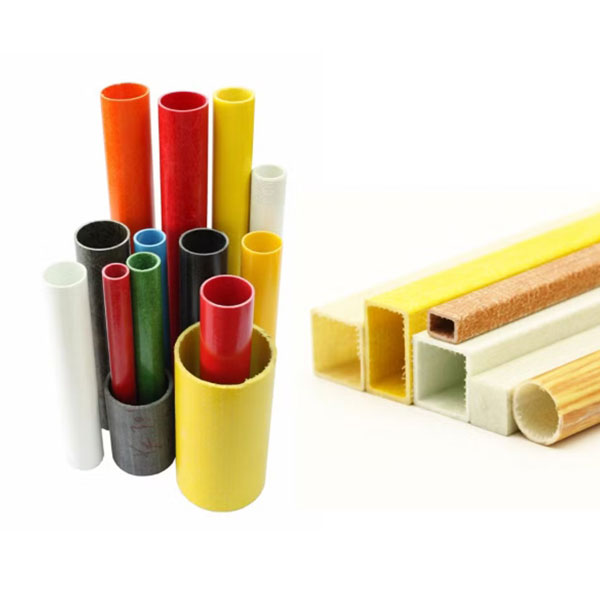
Tubes en PRV
Les tubes en PRF, ou tubes en plastique renforcé de fibres, sont des structures composites hautes performances constituées d'une matrice polymère renforcée par des fibres, généralement en verre, en carbone ou en aramide. Ces tubes sont connus….
-
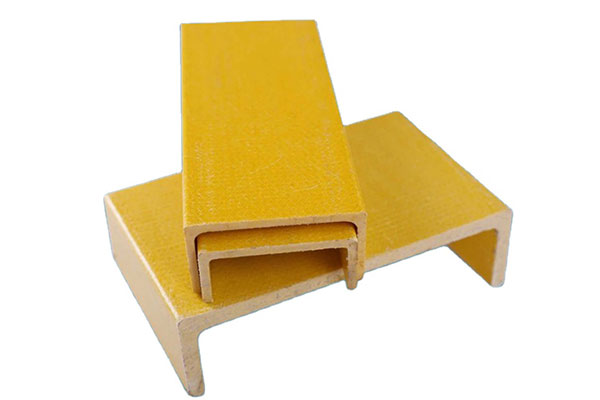
Section pultrudée en PRV
Les profilés pultrudés en PRF sont des profilés structuraux fabriqués à partir de polymère renforcé de fibres (PRF) par un procédé de fabrication appelé pultrusion. Cette méthode consiste à étirer des brins continus de renfort...
-
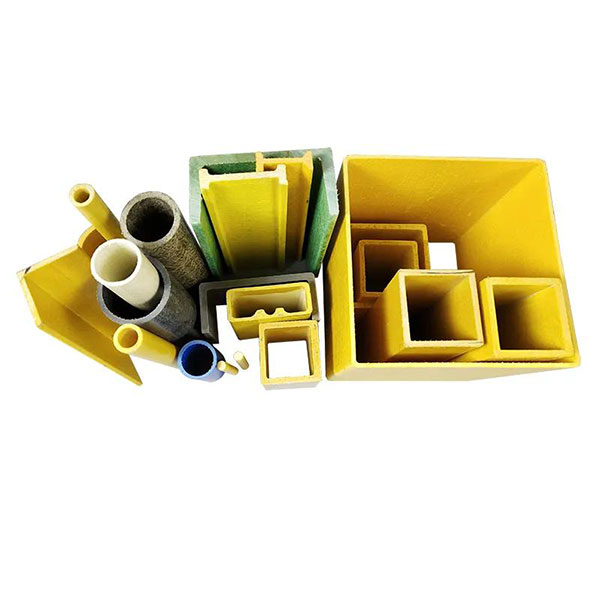
Formes structurées en PRV
Les profilés en PRF (également appelés profilés structuraux en PRF ou éléments structuraux en plastique renforcé de fibres de verre) sont des composants composites techniques fabriqués à partir d'une combinaison de fibres de verre renforcées...
-
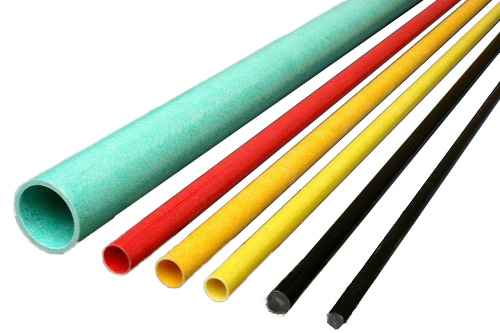
Tube rond creux FRP
Spécifications du tube rond creux FRP : Voir la taille D*T(MM) Poids (G/M) 4*1,25 14,88 4*1,3 14,51 5,9*1,5 40,5...
-
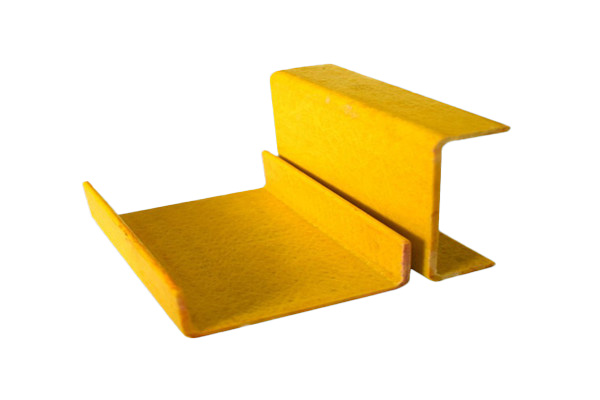
Canal FRP C
Spécifications du canal FRP C : Voir la taille A*B*C(MM) Poids (G/M) 65*46*4 1648 90*50*4 2112 41*29*3.5 (double C...